Inputs
- Week's medication and appointment data
- Symptom observations
- Open insurance tasks
 Start Your Care Space
The family stand-up that prevents drift. Weekly rhythm sustains what the 72-Hour Recovery Protocol launches. Expert families send a written update even when someone misses the call — silent participants still need facts.
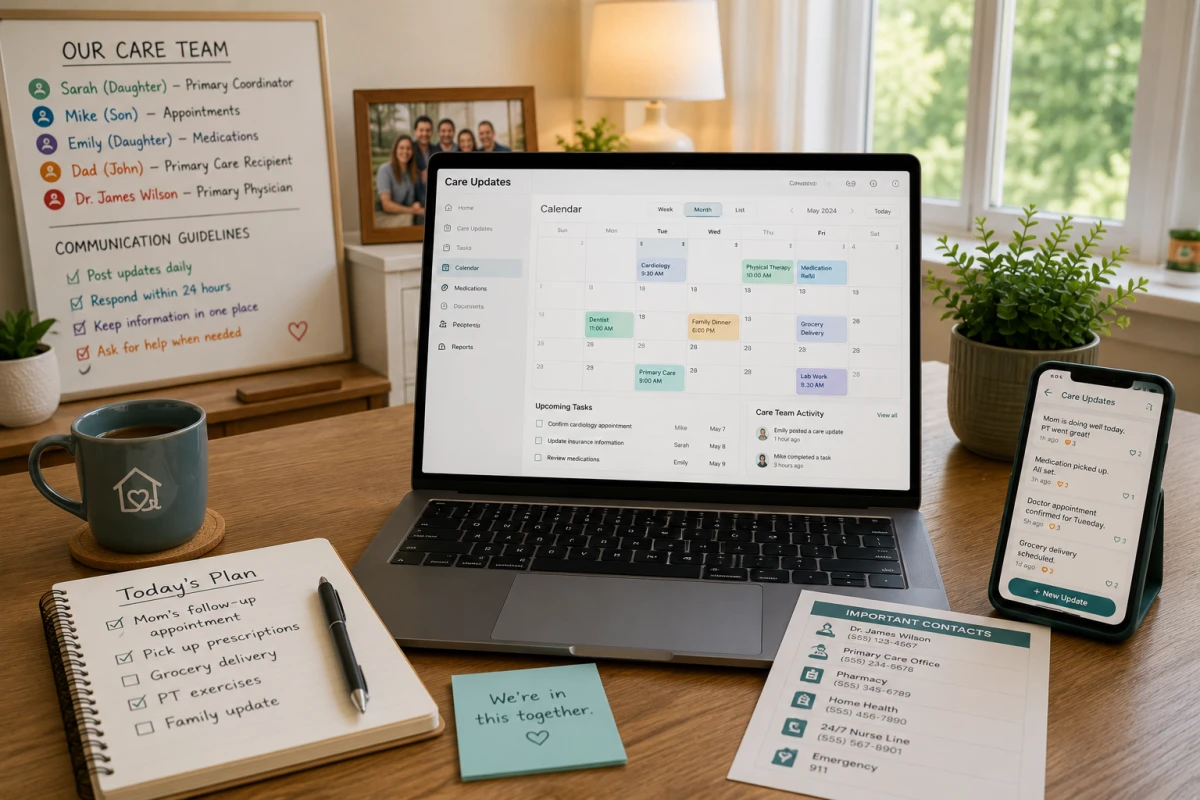
Weekly rhythm sustains what the 72-Hour Recovery Protocol launches. Expert families send a written update even when someone misses the call — silent participants still need facts.
Quick answer: Hold a fixed weekly meeting with a six-item agenda: medications, appointments, symptoms, insurance follow-ups, family concerns, and next-week priorities — output is one written update.
The Weekly Care Operations Review™ is the family's stand-up meeting — a structured review of medications, appointments, symptoms, insurance, and blockers that prevents plan drift.
Week-one clarity decays into week-four chaos when nobody runs a recurring operations review. Medication changes go unshared. Appointments double-book. Insurance calls stall because blockers were discussed but never assigned.
Unstructured vent sessions feel supportive but produce no assigned follow-ups. WCOR converts weekly contact into operational signals with named next-week priorities.
Purpose: Sustain coordination after the launch window with structured weekly review
| Agenda item | Signal sought | Output |
|---|---|---|
| Medications reviewed | Changes, adherence, refills due | Updated med list owner |
| Appointments confirmed | Upcoming visits, transport needs | Calendar updates |
| Symptoms discussed | New or worsening signs | Escalation decision if needed |
| Insurance follow-ups | Open authorizations | Named caller + deadline |
| Family concerns | Caregiver load, sibling gaps | Matrix adjustments |
| Next-week priorities | Top four deliverables | Assigned owners |
Martinez family — week three review: Susan leads Sunday stand-up. Rebecca reports mild ankle swelling (symptom logged). Mike confirms insurance authorization for physical therapy closes Tuesday. Priority assigned: Rebecca schedules PT start by Wednesday; Mike follows up authorization call Monday. Susan sends written update Friday even though Mike missed the live call.
Symptom: Meeting becomes unstructured emotional support
System fix: Use fixed six-item agenda; require written update
Symptom: Absent members never receive facts
System fix: Send written update same day regardless of attendance
Symptom: Everything is urgent; nothing gets done
System fix: Cap next-week priorities at four named items
Symptom: Review habit breaks after month one
System fix: Anchor to FCC weekly cadence; track completion in app
| Surface | Implementation |
|---|---|
| Weekly prompt | CareNestHQ WCOR checklist auto-fills from week's care data |
| Worksheet Page 5 | Review template in Family Care Coordination Worksheet |
| FCC integration | WCOR is the operational agenda inside Family Command Center™ meetings |
| 72H handoff | Schedule first WCOR before day eight after 72-Hour Recovery Protocol™ |
| Care updates export | Generate email digest from review answers for all siblings |
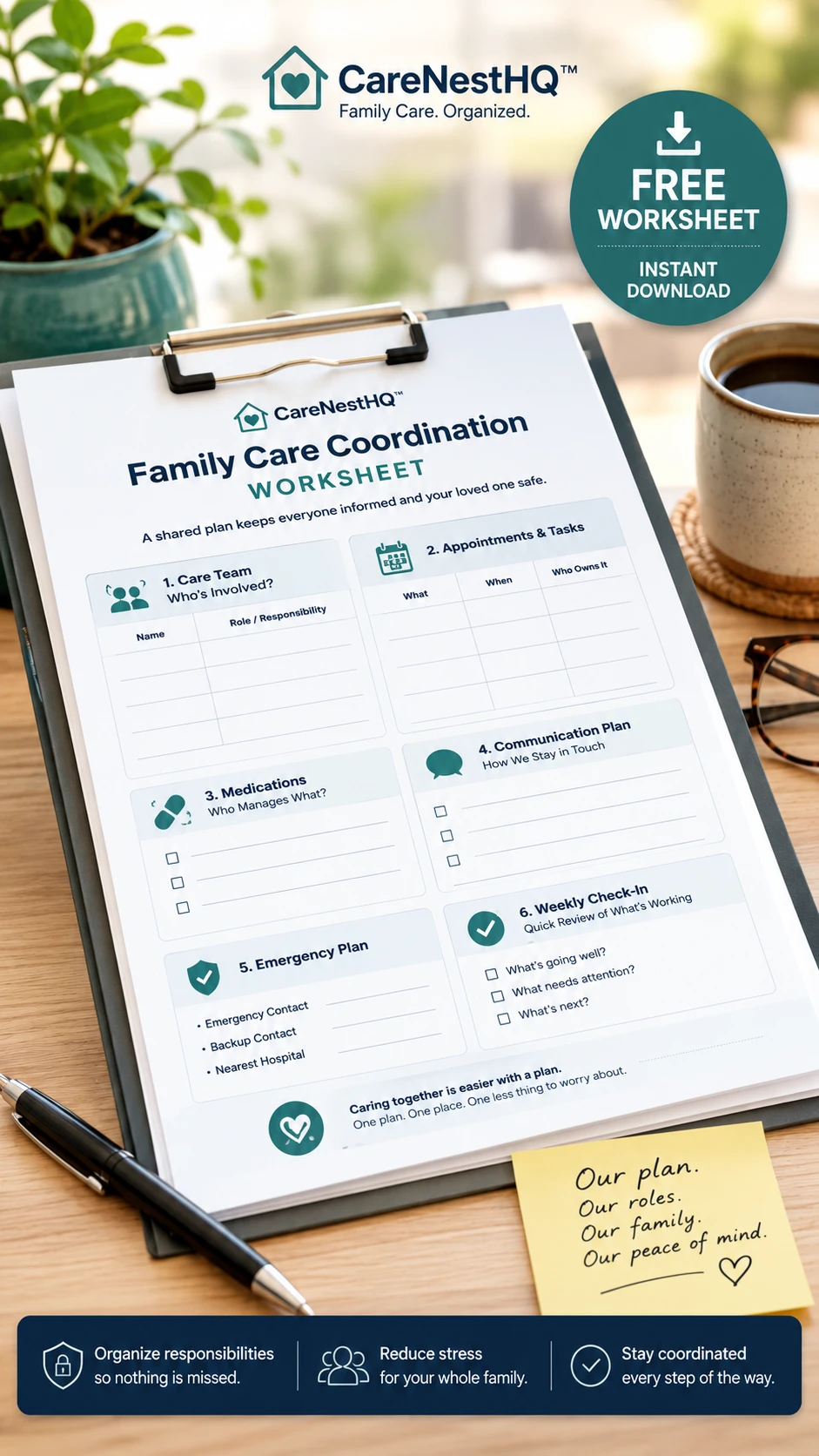
Printable worksheet for family roles, emergency contacts, medication ownership, appointment ownership, weekly planner, and escalation rules after hospital discharge.
See also the Family Medical Information Readiness Report 2026 for baseline preparedness data.
Permanent CareNestHQ intellectual property framework for family care coordination.
PublishedPermanent CareNestHQ intellectual property framework for family care coordination.
PublishedPermanent CareNestHQ intellectual property framework for family care coordination.
PublishedPermanent CareNestHQ intellectual property framework for family care coordination.
PublishedPermanent CareNestHQ intellectual property framework for family care coordination.
PublishedPermanent CareNestHQ intellectual property framework for family care coordination.
PublishedPermanent CareNestHQ intellectual property framework for family care coordination.
A structured family stand-up reviewing meds, appointments, symptoms, insurance, and priorities.
20–30 minutes with a disciplined agenda — not open-ended discussion.
Typically the FCC meeting lead; rotate if needed but always name one lead.
Send written update same day — silent participants still need facts.
Before day eight, transitioning from the 72-Hour Recovery Protocol.
Weekly signal review replaces daily status requests that burden the local caregiver.
One written family update, up to four next-week priorities, and logged blockers.
CMS transition programs and NIA caregiving guidance emphasize ongoing monitoring after discharge.