
Start Your Care Space
Hospital Discharge

Long Distance Caregiving After Hospital Discharge: A Remote Caregiver Guide

You got the call that Mom is coming home, but you live hours away. This guide shows what remote caregivers can own from afar, how to support local siblings without adding burden, and how to stay aligned through the first month of recovery.

  • Built for families coordinating care across cities and states
  • Useful after hospital discharge
  • Helps remote and local caregivers divide responsibilities
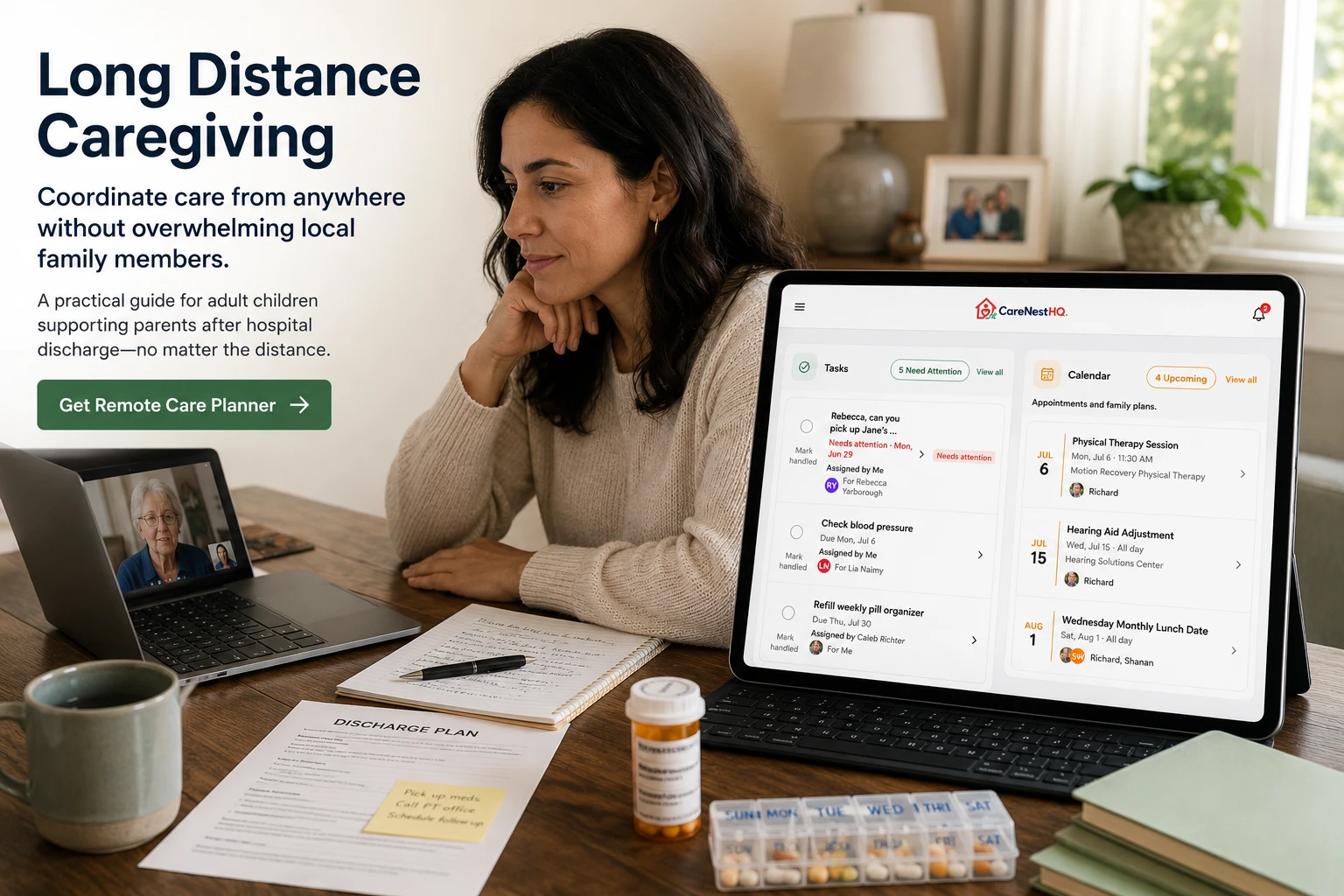
Long-distance caregiver coordinating hospital discharge recovery from home with care notes, phone, and family communication.

What this guide helps you do from afar

Use this guide to turn “What can I do from here?” into assigned responsibilities.

  • Claim remote tasks with deadlines, not vague check-ins
  • Set one communication channel and one shared folder
  • Schedule follow-ups and insurance calls from home
  • Run weekly video check-ins with a fixed agenda
  • Support medication safety without duplicating local dosing
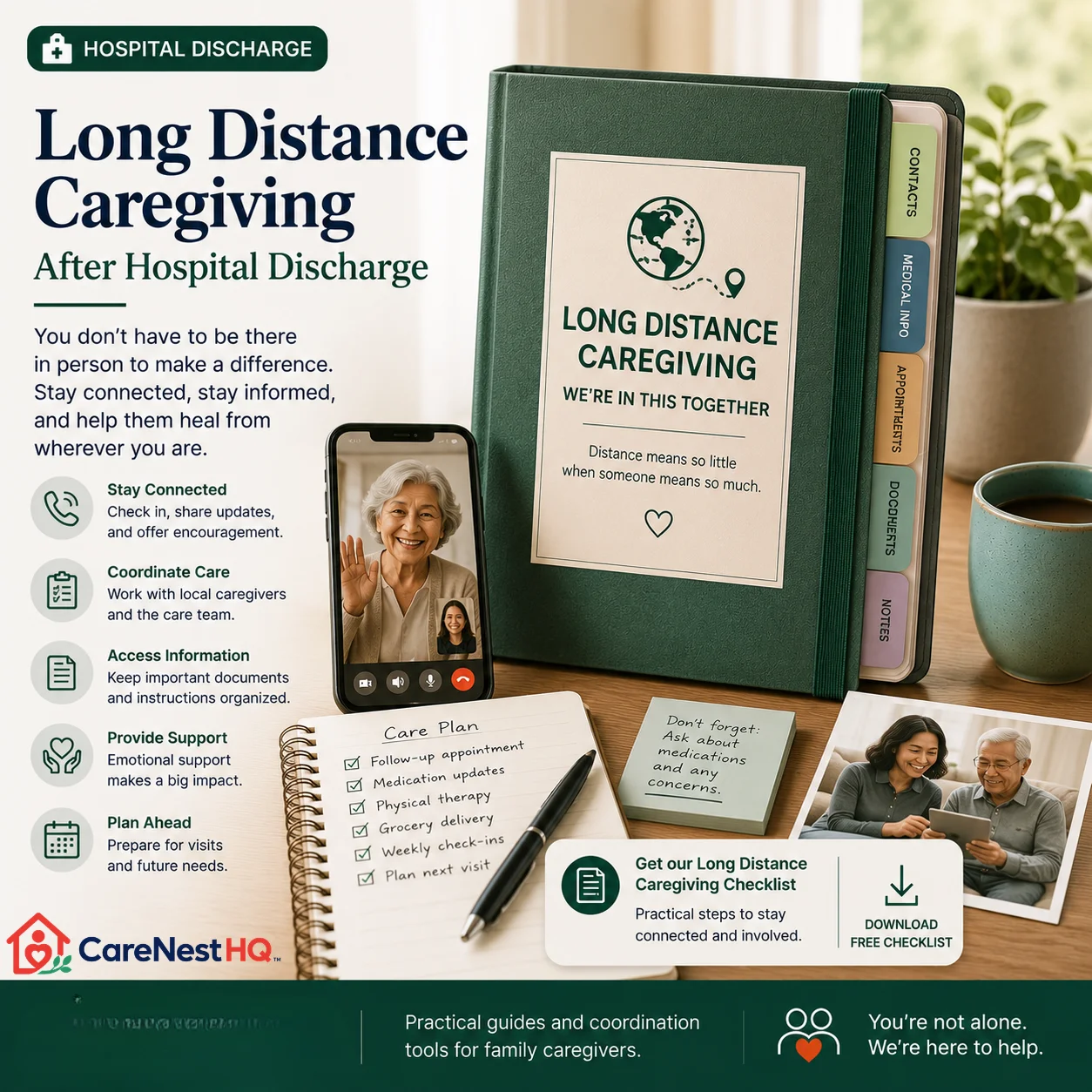
Remote Care Planner worksheet preview for long-distance caregivers coordinating hospital discharge tasks.
FREE WORKSHEET

Remote Care Planner

Get the printable planner that helps long-distance caregivers claim ownership, assign due dates, and support local family without adding confusion.

Use this planner before the first week turns into scattered texts, missed updates, and repeated phone calls.

What you get

  • Remote vs local responsibility table
  • First 72 hours checklist
  • Weekly family communication plan
  • Appointment ownership tracker
  • Emergency escalation chain
  • 100% Privacy
  • No Spam. Unsubscribe anytime.

When you are far away, discharge still needs you

Key insight: Remote caregivers help most when they own deliverables with deadlines, not when they ask open-ended "how is she doing?" questions that create more work for the local sibling.

If three siblings answer the same medication question differently, you have a coordination gap. Use this guide for the remote lens, and pair it with Family Recovery Coordination for full team ownership.

Remote siblings can research grab bars, order nightlights, schedule contractor installs, and run a FaceTime walkthrough using our home safety checklist from afar while the local sibling handles physical fixes.

Why Long-Distance Caregiving Breaks Down

Most families do not fail because they do not care. They fail because coordination lives in too many places at once, and nobody owns the handoffs end to end.

Example: One sibling has the discharge papers. Another has the medication update. The remote caregiver is calling the doctor without seeing either one.

  • Information scattered across text threads and one-off phone calls
  • No clear ownership for tasks after discharge
  • Siblings operating asynchronously with different assumptions
  • Medication changes lost between discharge papers and pharmacy calls
  • Appointment follow-up confusion with no shared calendar owner
  • Emergency information unavailable when decisions need to be fast

For full family role assignment and escalation ownership, use Family Recovery Coordination. This page stays focused on the remote caregiver operating model.

Why long-distance caregivers matter after hospital discharge

Recovery depends on medications, follow-up visits, home health, and family supervision. Remote caregivers can own phone and portal tasks that local caregivers often cannot complete during in-person care hours.

  • Schedule primary care and specialists from your home office
  • Call insurance for prior authorization and coverage questions
  • Keep one shared calendar and one weekly family update
  • Upload discharge documents to one shared folder
  • Research community supports and equipment options
Signature worksheet

Remote vs Local Tasks

Use this table in your first family call after discharge. Assign one primary owner for every row before week one starts.

Task category Local caregiver (in town) Remote caregiver (long distance)
Daily medication administrationPrimary ownerSupport list accuracy and refill calls
Prescription pickupPrimary ownerBackup if local unavailable
In-person follow-up visitsAttend or arrange transportSchedule visits, prep questions, join by video
Home health start dateMeet nurse and confirm setupConfirm agency coverage and start details
Discharge document storageScan or photograph papersOrganize and label shared folder
Insurance and billing callsAssist as neededPrimary owner for phone follow-through
Weekly family updateContribute on-site observationsSend consolidated written update
Emergency escalationFirst responder on sceneBackup phone tree and clinician outreach
Remote caregiver at home with laptop, phone, care notes, and discharge papers spread on a table
Split the table into named owners before week one. Remote siblings can absorb phone and document work while local caregivers stay bedside.

What remote caregivers should do in the first 72 hours

  1. Get the written discharge plan.
  2. Join the role assignment conversation.
  3. Claim three remote tasks.
  4. Set one communication channel.
  5. Confirm medication ownership.
  6. Add appointments to one shared calendar.

Use Family Recovery Coordination for role structure, Medication Changes After Hospitalization for med ownership, and Follow-Up Appointment Planning for calendar setup.

Your first week from another state

Day 1-2: Complete your claimed tasks and send one written update to all siblings.

Day 3-4: Hold a 20-minute video check-in with a fixed agenda: meds, appointments, blockers, decisions.

Day 5-7: Confirm primary care timing and home health starts in writing. Build one folder using Organizing Medical Information. When the first month stabilizes, graduate into Family Care Coordination for ongoing weekly reviews.

Feeling overwhelmed from far away?

Download the Remote Care Planner and assign responsibilities before week two starts.

Get Remote Care Planner

Staying informed without overwhelming the local caregiver

Remote caregivers often disappear for weeks or call three times a day for updates. Group texts fail because messages scroll away and three siblings give three different answers. Spreadsheets fail because nobody updates them after day three. The fix is named remote tasks, one channel, and one shared folder. Not more memory and not more guilt.

  • Ask what you can take off the local caregiver's plate
  • Own research and scheduling follow-through
  • Use one communication channel and archive key decisions
  • Reference the sibling protocol in Family Recovery Coordination

Organizing information you cannot see in person

  • Create one shared folder every sibling can access
  • Name files consistently by date and source
  • Request portal access where authorization allows
  • Keep emergency summary and contact info easy to find

Supporting medication safety from a distance

Remote caregivers can compare discharge and pharmacy lists by video, call pharmacies on refill status, and maintain a master list. Local caregivers still own on-site daily administration unless the remote caregiver travels home.

Scheduling and tracking follow-up from afar

Long-distance siblings are often ideal schedulers because they can call specialist offices during work hours while local caregivers remain bedside. Home health agencies, discharge planners, and care managers all expect one family point of contact. Remote siblings can fill that role without traveling home.

  • Schedule PCP and specialist appointments
  • Capture referral confirmation numbers
  • Confirm home health and therapy starts
  • Book labs or imaging before next physician visits

How to set up remote care after discharge

  1. Get the written discharge plan and medication list.
  2. Join the family role assignment conversation within 48 hours.
  3. Claim three remote tasks with deadlines.
  4. Create one shared folder and upload every document you receive.
  5. Schedule primary care and critical specialist visits.
  6. Set a weekly video check-in time every sibling accepts.
  7. Send one consolidated family update each week.
  8. Review roles at day seven and adjust before week two.
Built for remote and local teams

How CareNestHQ helps remote caregivers

Long-distance caregiving works better when everyone can see the same care plan. CareNestHQ gives families one shared place for appointments, medications, documents, tasks, and updates so remote and local caregivers are not rebuilding the plan from memory.

The goal is not more communication. The goal is fewer misunderstandings.

Common questions

Frequently Asked Questions

How do I care for aging parents from another state after hospital discharge?

Focus on phone-based tasks you can complete from home: scheduling follow-up visits, calling insurance, organizing discharge documents in a shared folder, and joining weekly video check-ins. Let the local sibling own in-person medication administration, transportation, and daily supervision unless you travel home. The goal is assigned deliverables with deadlines, not open-ended status calls that add work for whoever is bedside.

What tasks should a long-distance caregiver own?

Remote caregivers own scheduling calls, insurance follow-through, document uploads, research, and the weekly family update. Local caregivers own in-person care, transportation, daily medication administration, and meeting home health at the door. Use the remote-vs-local table in this guide to assign one primary owner per row before week one starts.

How often should remote siblings check in?

A weekly video call plus urgent-only texts works for most families during the first month after discharge. Increase frequency only if the discharge plan requires closer monitoring or the local caregiver explicitly asks for more contact. Daily check-ins without taking tasks off their list usually increase stress rather than reducing it.

How do I avoid overwhelming the local caregiver?

Agree on one weekly video call, urgent-only texts between calls, and assigned remote deliverables with due dates. Ask what you can take off your sibling's plate instead of requesting open-ended updates. When you do call, arrive with a short agenda: medications, appointments, blockers, and decisions needed. Then send one consolidated written summary to the whole family.

Can siblings share caregiving responsibilities across different states?

Yes. Most families split remote phone tasks from local in-person care. One sibling may own specialist scheduling and insurance calls from another city while another owns bedside recovery at home. The Remote Care Planner helps you write those assignments down so nobody assumes someone else already handled it.

What technology helps long-distance caregivers coordinate care?

Families need one shared calendar, one document folder, and one communication channel. Spreadsheets and group texts fail when schedules change daily. CareNestHQ combines appointments, medications, documents, tasks, and updates so remote and local siblings see the same plan without rebuilding it from memory.

What should remote caregivers do in the first 72 hours?

Get the written discharge plan, join the family role conversation, claim three specific phone tasks, set one communication channel for non-urgent updates, confirm who owns medications, and add every appointment to one shared calendar. If you complete only one thing, make it the written plan plus named owners.

How do I keep track of medications from far away?

Compare discharge and pharmacy lists by video, call pharmacies on refill status, and maintain one master medication list in a shared folder. Remote caregivers support accuracy and refill follow-through. Local caregivers still own on-site daily administration unless you travel home.

Next step

Start remote caregiving with clear ownership.

Claim remote tasks, align with local siblings, and keep one source of truth from anywhere.