In the hospital
- Bed rails and staff nearby
- Bright overhead lighting
- Non-slip cleared floors
- Nursing station supervision
- Accessible bathroom equipment
 Start Your Care Space

Your parent is cleared to go home. This guide walks room by room so you fix fall risks before discharge day, not after a scare.

Hospitals manage falls with rails, nurses, and monitored beds. Home has throw rugs, poor lighting, and no call button.
Research on care transitions consistently shows that many readmissions trace to preventable home-environment problems, especially falls, medication confusion in dim light, and missed supervision when furniture layout blocks walker paths.
The first 72 hours after discharge are the highest-risk window. Your parent may be weaker, on new medications, and disoriented in familiar rooms that suddenly feel unfamiliar.
We moved the recliner before she came home. She tried to sit where it always was and almost fell backward.
That is not bad caregiving. It is a home that was not re-staged for recovery.
This page owns the house. For clinical task lists, use Hospital Discharge Care Planning. For who on your family team owns each category, see Family Recovery Coordination.
Use the comparison below, not as a reason to panic. A reason to walk the house before the car pulls up.
One sibling should own the walkthrough. Not everyone inspecting the same bathroom at once.
For the full family responsibility model, see Family Care Coordination and the responsibility matrix on Family Recovery Coordination.
Long-distance siblings can own research, contractor scheduling, and Amazon orders for grab bars and nightlights. See Long Distance Caregiving for remote task patterns.
Download the Home Safety Checklist (printable PDF).
Highest fall risk in most homes.
Ask at discharge whether occupational therapy recommended equipment. Add those items to Questions to Ask Before Leaving the Hospital.
Daughter preparing before Mom's discharge
Thursday off, FaceTime walkthrough with brother, overnight grab bar delivery, Friday re-walk before transport.
Local and remote siblings
James owns physical walkthrough; Priya owns shared folder, equipment research, and OT delivery scheduling.
First night after heart failure
Near-miss without nightlight leads to first-night escort rule. Family logs and adjusts instead of assuming one walkthrough is enough.
Maria gets discharge orders on Wednesday for a Friday release. She takes Thursday off, walks the house with her brother on FaceTime, and texts a photo checklist: bathroom grab bar ordered for overnight delivery, rugs rolled, nightlights plugged in. Friday morning she re-walks the bathroom path before the hospital transport arrives.
James lives with Dad. Priya is three states away. James owns the physical walkthrough. Priya owns the shared folder, researches fall-prevention mats, and schedules the OT equipment delivery. They use one checklist document so neither duplicates orders.
Linda's husband comes home tired and uses the bathroom without the new nightlight Maria installed. He misjudges the step. No injury, but the family adds a first-night escort rule for bathroom trips until week two. They log it and adjust instead of assuming one walkthrough is enough.
Print or open the Home Safety Checklist. Assign one walkthrough owner and one backup before anyone enters the home.
Start at the entry your parent will use from the car. Walk bathroom → bedroom → kitchen → stairs → living areas in that order.
Photograph each fixed hazard for siblings who cannot visit. Upload photos and notes to your shared folder.
Add safety fixes to your shared task list with owners and due dates — not sticky notes on the fridge.
Re-walk within 24 hours of discharge. Review progress at day seven during family check-in.
Use a room-by-room checklist covering bathroom grab bars, lighting, rug removal, stair rails, medication storage, and first-72-hour supervision. Download the CareNestHQ Home Safety Checklist for a printable walkthrough aligned to post-hospital recovery.
Ideally 24 to 48 hours before discharge day. At minimum, complete bathroom and bedroom paths before your parent walks in the door.
Bathroom transfers and nighttime trips without adequate lighting. Fix grab bars, mats, and nightlights first.
Yes. Remote siblings can order equipment, schedule contractors, maintain the shared photo checklist, and join video walkthroughs. Local siblings own physical installation and first-night supervision.
No. Home safety supports the clinical discharge plan. Use Hospital Discharge Care Planning for medical tasks and this guide for environmental preparation.
Discuss a one-level recovery plan with the discharge team before leaving the hospital.
If ordered or recommended at discharge, yes. Ask the care team whether a home OT evaluation is appropriate after significant mobility change.
Home safety tasks belong in your family operating system. Assign owners, track completion in one shared place, and review at weekly check-ins under Family Care Coordination.
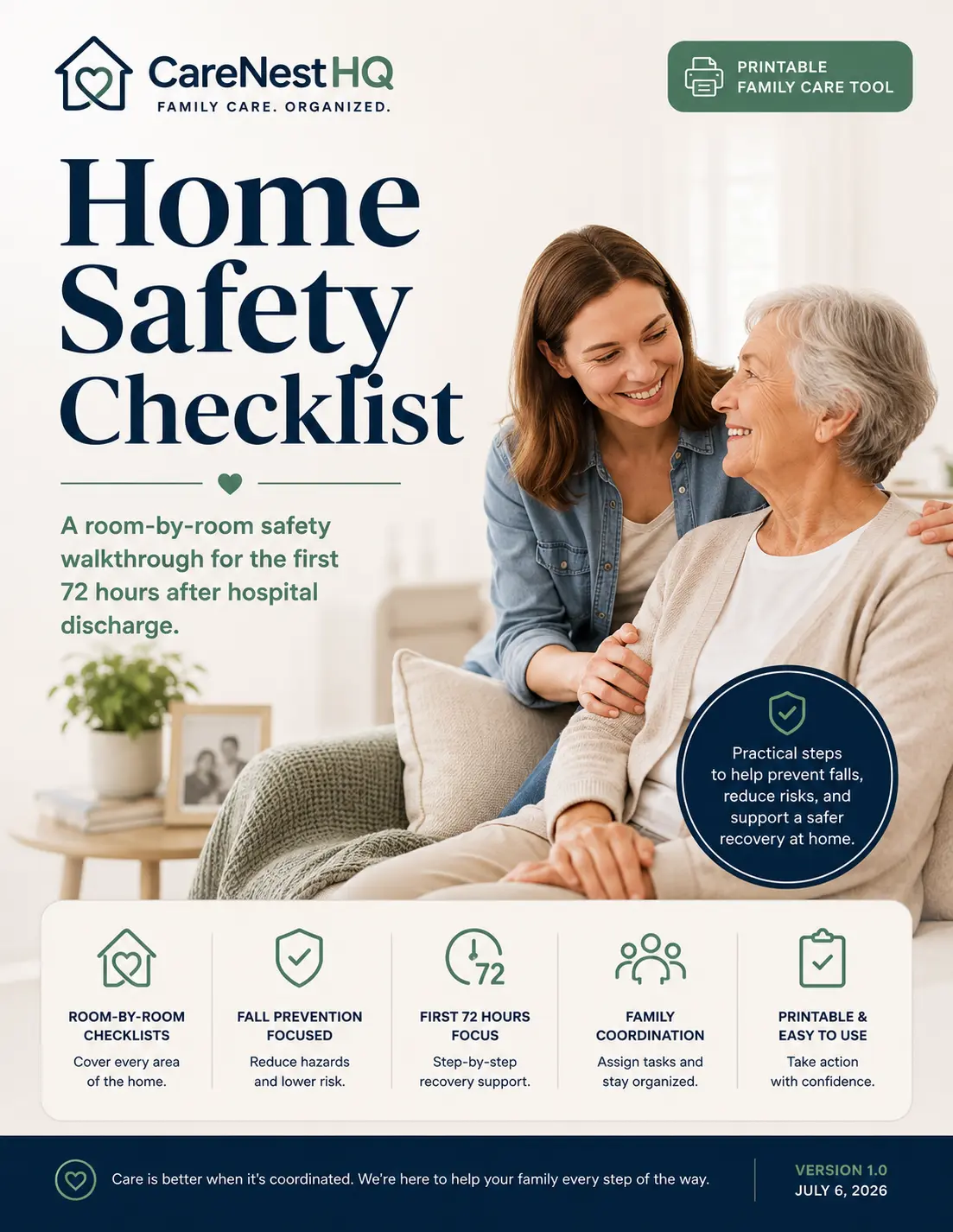
Printable checklist