Start Your Care Space
Family caregiving

One shared place to organize care for your parent

Keep medications, appointments, documents, tasks, and family updates together so everyone knows what needs to happen next.

  • For siblings coordinating care after hospital discharge
  • Works with a worksheet, shared folder, or CareNestHQ
  • Free Family Care Coordination Worksheet included

This guide helps when you are dealing with:

  • Missed medication changes
  • Repeated check-in texts
  • Side conversations that leave someone out
  • No clear owner for appointments or documents
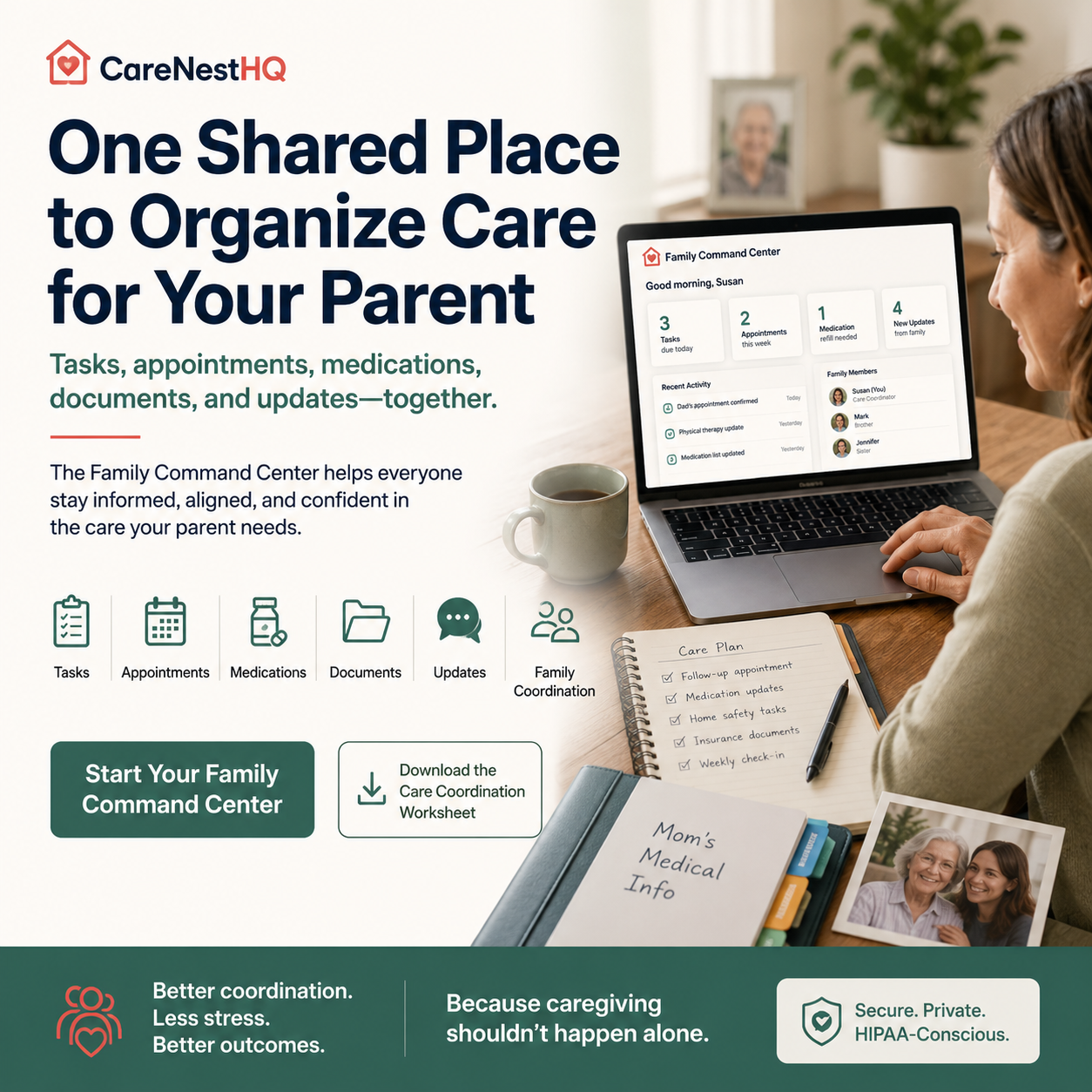
Caregiver at home using a laptop to coordinate parent care tasks, appointments, medications, and family updates in one place

When care lives in texts, notes, and calls, things slip

Most families do not fail because they do not care. They fail because everyone assumes someone else is handling it. A daughter thinks her brother booked the follow-up. A spouse believes a sibling updated the medication list. Meanwhile, important tasks sit in group texts nobody fully read.

After hospital discharge, this gets worse fast. The local caregiver starts repeating the same updates on every call. Remote siblings feel helpful but add stress without removing work. Side conversations mean one person learns about a medication change last, or not at all.

You need one shared place where tasks, appointments, medications, documents, and updates live together. That is what a Family Command Center is for.


Real family example

How the Martinez family stopped missing updates

Rebecca cares for their mother locally. Mike lives two states away. Susan lives across the country. The following is an example scenario.

Before: texts and assumptions

Mike texted Rebecca every morning to ask how their mother slept. Susan called on weekends with suggestions Rebecca had already tried. Nobody had a single list of who was handling prescriptions, appointments, or insurance calls.

Problem: tasks slipped and updates got missed

A medication change from the cardiologist reached Rebecca by phone, but Mike and Susan did not hear about it for three days. Rebecca missed a dose window while answering repeated check-in texts. A follow-up appointment almost went unscheduled because each sibling assumed someone else had booked it.

After: one shared place clarified ownership

The siblings set a Sunday 4 p.m. video call with Susan leading. Routine updates went to one shared workspace. For urgent matters, Rebecca contacted Susan first, and Susan alerted everyone else. They agreed on one rule: no side texts about care tasks.

Outcome: everyone knew what they owned

Mike's daily check-ins stopped. Susan sent one written update each week instead of five separate threads. Rebecca got fewer interruptions during medication windows. When the cardiologist changed a dose, all three siblings saw the update the same day.

What a Family Command Center actually is

It is not a group chat. It is not a shared feeling of concern. It is one place your family agrees to check for what needs to happen next.

You do not need special software. A printed worksheet, a shared folder, or a family app all work. The point is clarity: who owns each task, where updates go, and what to do when something urgent happens.

This page is educational. It is not medical advice and does not replace your care team.

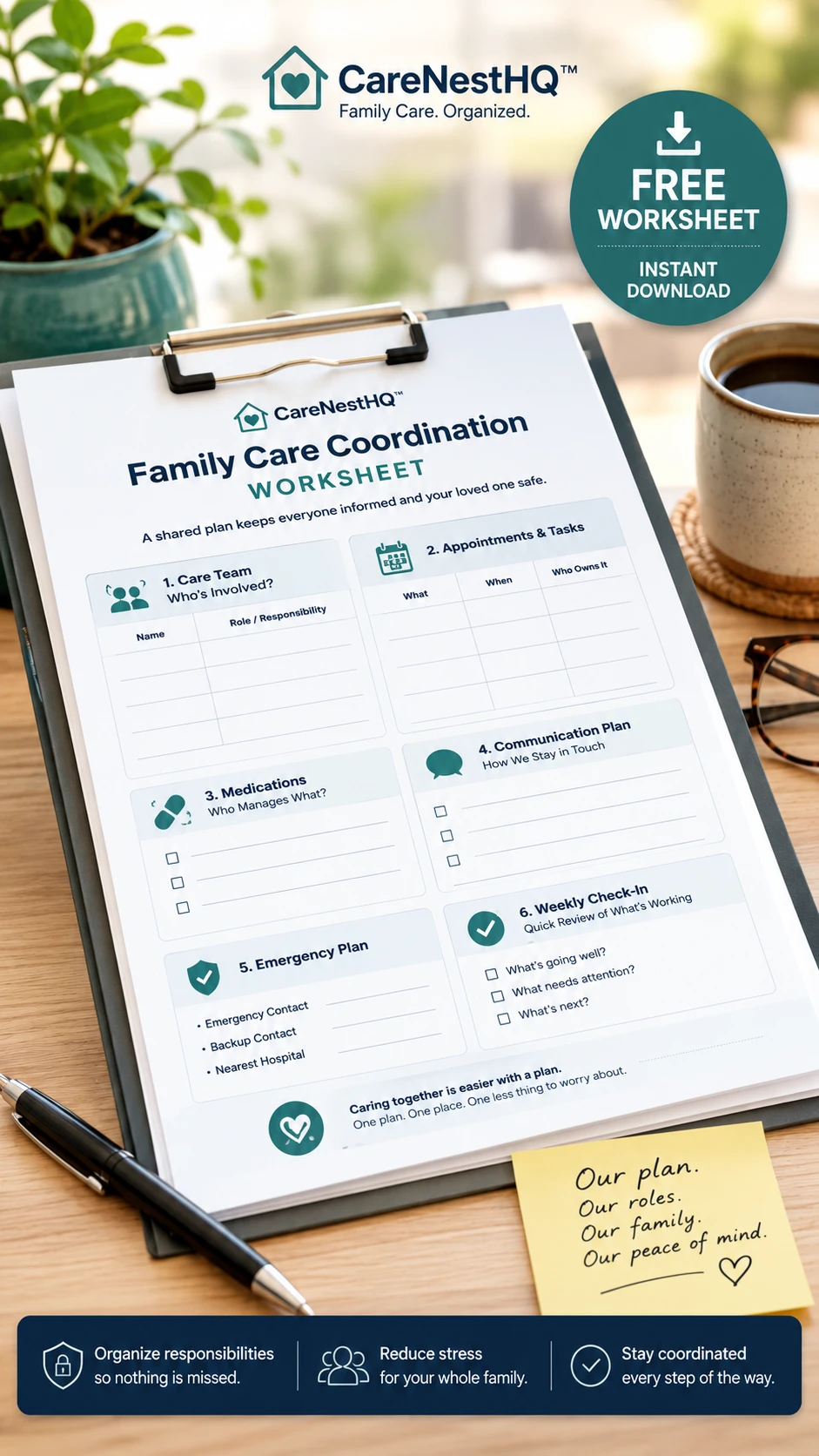
Family Care Coordination Worksheet preview with sections for roles, medications, appointments, and weekly planning
FREE DOWNLOAD

Start with the Family Care Coordination Worksheet

Print it for your first family meeting. Capture roles, emergency contacts, medication ownership, appointment ownership, and your weekly check-in plan.

  • Worked example you can follow tonight
  • Printable PDF for siblings near and far
  • Pairs with a CareNestHQ care space when you are ready

When your family wants one digital care space

Many families start with the worksheet and a shared folder. That is enough. When you want medications, appointments, tasks, documents, and family updates in one app, CareNestHQ is built for that.

  • One place for the whole picture. Siblings see the same medication list, calendar, and open tasks without calling the local caregiver for a status update.
  • Updates without text chains. Post one care update. Everyone reads it on their own time.
  • Built for local and remote siblings. The person on the ground handles in-person tasks. Remote siblings own scheduling, documents, and insurance calls.

Pair this guide with Family Care Coordination for the full post-discharge plan, or Long-Distance Caregiving if siblings live far apart.

Frequently asked questions

What is a family command center for caregiving?

It is one shared place where your family keeps tasks, appointments, medications, documents, and updates organized. Everyone checks the same spot instead of relying on scattered texts and phone calls.

How often should remote siblings check in?

Once a week at a set time works for most families. Use a short family call or written update for routine matters. Save urgent contact for real emergencies.

What channel should families use for care updates?

Pick one primary place for non-urgent updates, such as a shared app, email thread, or family workspace. Post routine information there so nothing gets lost in side conversations.

Who should lead family care meetings?

Name one person to run the weekly check-in. Often a remote sibling with strong organizational skills takes this role. Also name one person to handle urgent calls before a crisis happens.

When should a family set up a command center?

Set it up in the first few days after hospital discharge, or whenever group texts and missed updates start causing stress. Earlier is better than waiting for a crisis.

How does this connect to emergency planning?

Your command center should name who calls the doctor, who contacts siblings, and when to dial 911. Pair it with a simple emergency plan so no one debates roles during a fall or medication reaction.

Sources and trust

CareNestHQ publishes practical guides for family caregivers. This page draws on established caregiving guidance and coordination patterns families use after hospital discharge.

See also the Family Medical Information Readiness Report 2026 for baseline preparedness data.